A/c Peptide Testing Laboratories Third-party Peptide Evaluation
Chemical & Physical Peptide Evaluation
The gold criterion for measuring peptide purity is high-performance fluid chromatography, globally abbreviated as HPLC. If you see a pureness portion on a peptide item, it likely originated from an HPLC evaluation. This matters since peptides are constructed one amino acid at once through solid-phase peptide synthesis (SPPS). At each action, there's a little possibility that something goes wrong-- an amino acid doesn't attach, the incorrect alteration occurs, or a side reaction produces an unintended result. Over a chain of 10, 20, or 40 amino acids, those tiny per-step error prices compound.HPLC can sustain insurance claims regarding chromatographic pureness, impurity top worry, and degradation fads when the approach is proper and the chromatogram is offered. If a peptide is re-tested after storage space stress, HPLC can expose whether new pollutant peaks have actually appeared or whether the primary peak location has declined. This connects directly with taking care of topics such as peptide storage and peptide reconstitution. As GHK-Cu an examples of product-level context, compare the anticipated masses for Retatrutide, BPC-157, and Semaglutide.
Lack Of Reliable Techniques For Structural Alterations And Series Confirmation
At Maxed Out Compounds, every item we provide includes a clear screening document and transparent documents. Our mission is to support researchers with high-purity, validated substances that fulfill the demands of modern clinical study-- absolutely nothing more, absolutely nothing less. Independent, third-party screening plays a crucial role in making certain neutrality and precision. By utilizing outside laboratories for verification, providers remove bias and maintain clinical reliability. It's an extra step that gives researchers self-confidence that each peptide meets consistent, verifiable criteria. This grade suits the majority of artificial insemination research applications-- receptor binding assays, enzyme activity research studies, and cell society experiments.What Can Fail Without Research Laboratory Recognition?
A practical assay measuring downstream signaling-- or an architectural research study using NMR or X-ray crystallography-- demands the greatest pureness offered. Crystallographers in particular often need ≥ 98% purity due to the fact that even small pollutants can stop crystal formation or present problem right into the crystal latticework. As molecules exit the column, they travel through a detector-- usually a UV detector set to 214 or 220 nm, wavelengths where the peptide bond takes in light strongly. The detector records just how much UV light is taken in gradually, producing a graph called a chromatogram. This overview breaks down what purity really means in peptide chemistry, how it's gauged, what the impurities are, and exactly how to read the documents that shows a peptide is what it asserts to be.
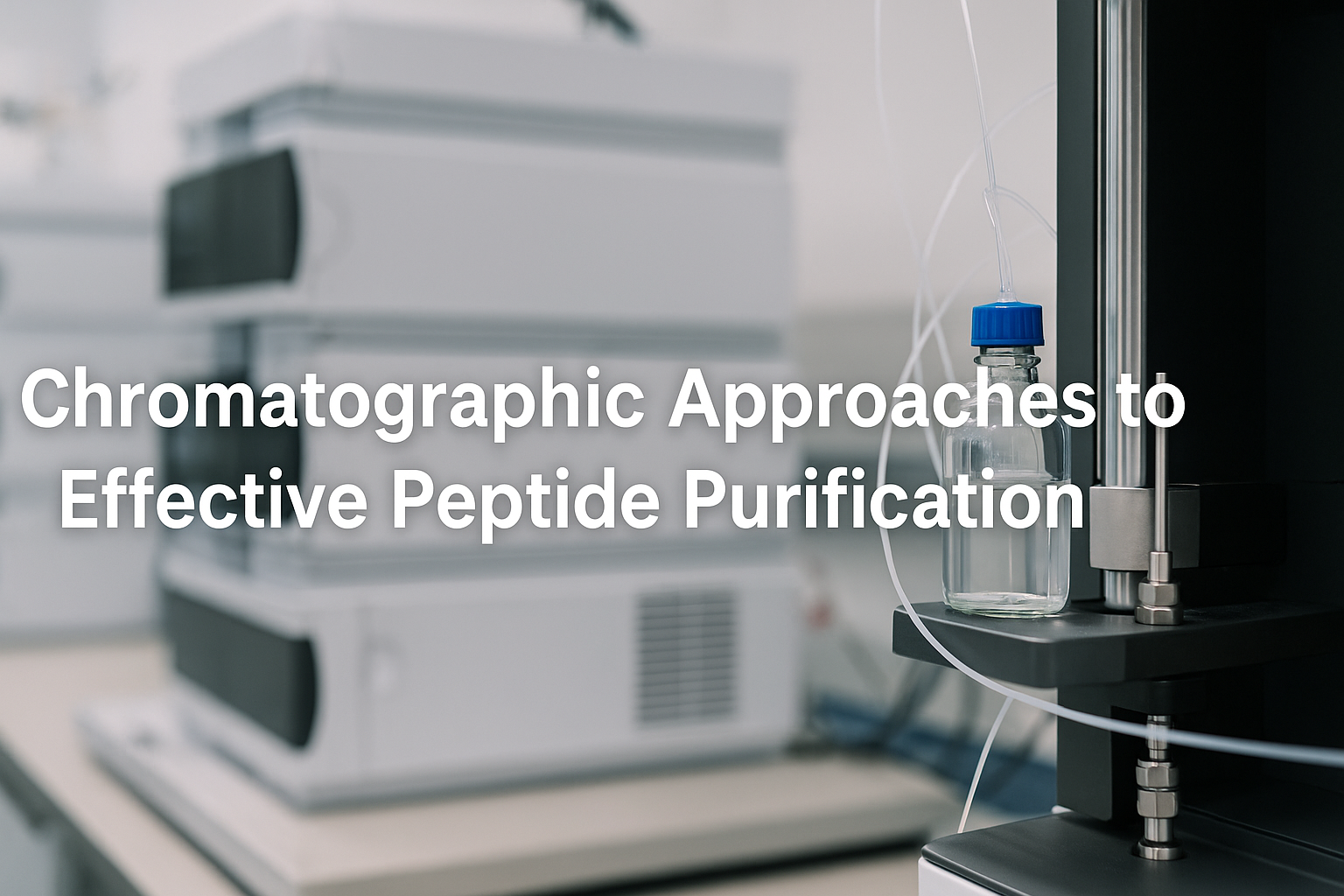
The liquified peptide example is infused right into a stream of fluid solvent (the mobile stage) that moves through a tube loaded with little fragments (the stationary phase). Various particles "stick" to those fragments with various staminas, so they take a trip via the column at different rates. Subtle distinctions in raw material pureness and structure can lead to disparities in the task of the end product.- Numerous peptide programs face logical unpredictability prior to they stop working medically.
- Various other spectroscopic strategies, such as Infrared (IR) or UV-Vis analysis, are sometimes used for rapid top quality checks or architectural confirmation.
- Selecting a reliable third-party lab is essential to obtaining dependable peptide recognition outcomes.
- With high degrees of experience in carb chemistry and our thorough peptide analysis system, Innovative Peptides can give premium peptide pureness resolution services.
- Various molecules "stick" to those particles with different staminas, so they take a trip via the column at different speeds.
- Purity screening asks just how much of the found example is the major peptide versus associated pollutants.